Solar Batteries in Pakistan: The 2026 Storage Buyer’s Guide
Panels generate power only while the sun shines, so the real question for outage-weary households is storage. Choosing the right solar batteries in Pakistan decides whether your lights stay on during load-shedding or whether your expensive array sits idle after sunset. This 2026 guide explains battery chemistries, sizing, lifespan, and the costs that genuinely matter before you spend a rupee.
Storage is where solar shifts from a bill-saving tool to a true power-independence system. Get it right and you ride out grid failures effortlessly; get it wrong and you overpay for capacity you never use.
Why Solar Batteries in Pakistan Are Worth Considering
Grid-tied solar alone shuts down during an outage for safety reasons. Adding storage keeps your fans, lights, and routers alive when the grid drops. In cities with frequent load-shedding, that reliability is often the deciding factor for going solar at all.
Pakistan’s regulator supports distributed generation through net metering, and the framework published by NEPRA lets you combine storage with grid export for the best of both worlds. Storage covers your outages while surplus daytime generation still earns credits.
Three benefits stand out when you add solar batteries in Pakistan to a system:
- Backup during outages: essential loads keep running automatically.
- Self-consumption: store daytime surplus and use it at night.
- Load-shift savings: reduce reliance on peak-tariff grid units.
Pairing storage with a qualified installer is key. A seasoned solar company in Lahore will size the bank to your actual backup needs rather than selling you more capacity than your home requires.
Which Battery Chemistry Is Right for You?
The market splits mainly between lead-acid (tubular) and lithium (LiFePO4). Each suits a different budget and usage pattern.
| Feature | Tubular Lead-Acid | Lithium (LiFePO4) |
|---|---|---|
| Upfront cost | Lower | Higher |
| Cycle life | ~1,500 cycles | 4,000-6,000 cycles |
| Usable depth | ~50% | 80-90% |
| Maintenance | Water top-ups | Virtually none |
| Footprint | Large, heavy | Compact |
| Best for | Tight budgets | Daily cycling |
Lead-acid wins on sticker price, but lithium usually wins on cost-per-usable-kWh over its life because you can discharge it deeper and it lasts far more cycles. For daily backup use, lithium is increasingly the sensible choice in 2026.
Understanding Depth of Discharge
Depth of discharge (DoD) is how much of a battery you can safely use. A 100Ah lead-acid unit really gives you about 50Ah before damage, while a lithium unit of the same rating delivers 80-90Ah. Compare usable capacity, not nameplate capacity, or you will undersize your bank.
How Do You Size a Battery Bank?
Sizing starts with the loads you want to back up and for how long. List essential appliances, estimate their watt-hours per outage, then add a margin for battery efficiency.
- List backup loads (lights, fans, fridge, routers) and their wattage.
- Estimate hours of autonomy you need during a typical outage.
- Multiply watts by hours to get watt-hours required.
- Divide by usable DoD to find the true capacity needed.
- Add 15-20% for inverter and round-trip losses.
For example, backing up 500W of loads for four hours needs roughly 2,000Wh of delivered energy, which translates to a larger nameplate bank once DoD and losses are factored in. An honest installer runs this calculation with you rather than guessing.
Matching Batteries to Your Inverter
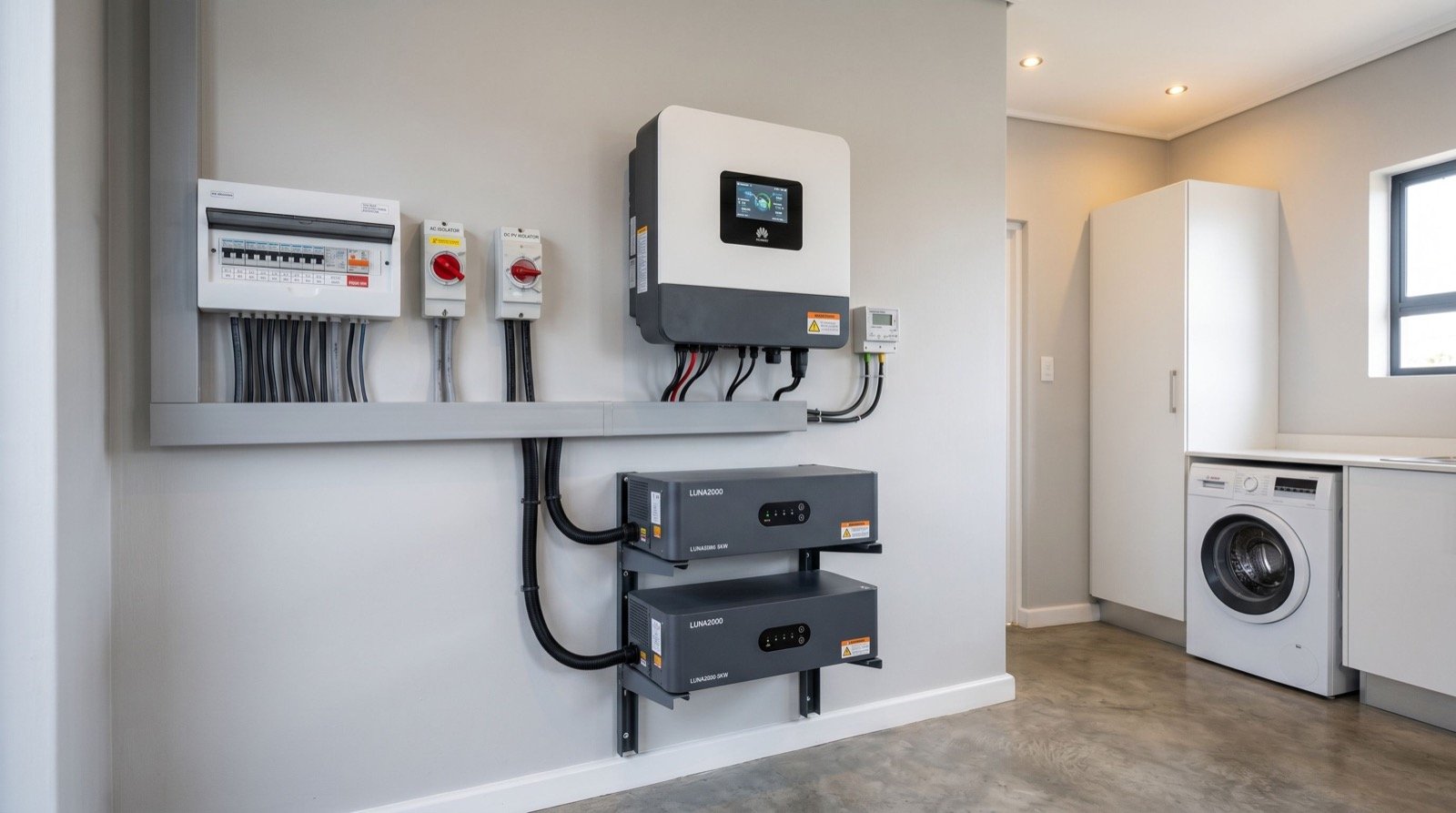
Your battery voltage must match your hybrid inverter’s requirements, commonly 48V for residential systems. Mixing incompatible voltages or old and new batteries shortens life and voids warranties. Confirm compatibility before buying, and ideally source the inverter and bank together. For a curated, compatible range, browse verified solar batteries in Pakistan rather than piecing together mismatched parts.
Lifespan, Warranty, and Maintenance
Battery lifespan is measured in charge-discharge cycles, not just years. Lithium packs commonly carry warranties covering several thousand cycles or up to ten years, while quality tubular batteries last three to five years with proper upkeep.
To protect your investment, work with reputable service experts and follow a basic routine:
- Keep batteries in a cool, ventilated space; heat kills capacity.
- For lead-acid, check electrolyte levels monthly and top up with distilled water.
- Avoid chronic deep discharges that stress any chemistry.
- Review inverter logs for recurring low-voltage warnings.
Temperature management alone can add years of service life, especially during Pakistan’s intense summers.
Is Battery Storage Worth the Cost in 2026?
For pure bill savings on a stable grid, storage adds payback time. But for homes facing regular outages, the value is reliability you cannot easily price. As lithium costs keep falling, the gap between backup convenience and total cost narrows every year, making 2026 a reasonable time to invest.
The smartest approach is to start with a hybrid inverter and a modest bank, then expand storage as your budget allows and your needs grow.
Lithium vs Lead-Acid: A Real Cost Comparison
Sticker price misleads many buyers. The honest way to compare storage is cost per usable kilowatt-hour across the battery’s full life, not the number on the box today.
Consider two banks of equal nameplate capacity. The lead-acid option costs less upfront, but you can only use about half of it and it may need replacing within four years. The lithium option costs more initially, yet you access most of its capacity and it keeps cycling for the better part of a decade.
- Lead-acid: lower entry cost, more frequent replacement, routine maintenance.
- Lithium: higher entry cost, far more cycles, near-zero maintenance.
- Verdict: for daily cycling, lithium usually costs less per usable unit over ten years.
A practical tip from installed systems: if your budget is tight today but you cycle daily, buy a smaller lithium bank rather than a large lead-acid one. You will often get more usable energy and a longer service life for a similar total spend, and you can expand the lithium bank later.
Frequently Asked Questions
How long do solar batteries last in Pakistan?
Tubular lead-acid batteries typically last three to five years, while lithium LiFePO4 packs can run eight to ten years or several thousand cycles. Heat and deep discharging are the main factors that shorten life.
Are lithium batteries better than lead-acid?
For daily cycling and backup, lithium usually offers lower lifetime cost thanks to deeper usable capacity and far more cycles. Lead-acid still suits very tight budgets or light, occasional use.
Can I add batteries to an existing solar system?
Yes, if your inverter is hybrid-ready. If you have an on-grid-only inverter, you may need to upgrade it before adding storage, so plan for this early.
How many batteries do I need for my home?
It depends on your backup loads and desired autonomy. Calculate your watt-hour needs, divide by usable depth of discharge, and add a loss margin. A professional installer will size the bank precisely to your usage.
Final Thoughts
Choosing solar batteries in Pakistan is about matching real backup needs to the right chemistry, voltage, and capacity. Compare usable energy rather than nameplate numbers, prioritise compatibility with your inverter, and keep the bank cool and properly maintained. Do that, and your storage system delivers years of dependable power, turning your rooftop array into genuine protection against an unpredictable grid.